
Serious Play: How Veterans Can Use Curiosity and Creativity to Navigate Transition
Jan 28, 2026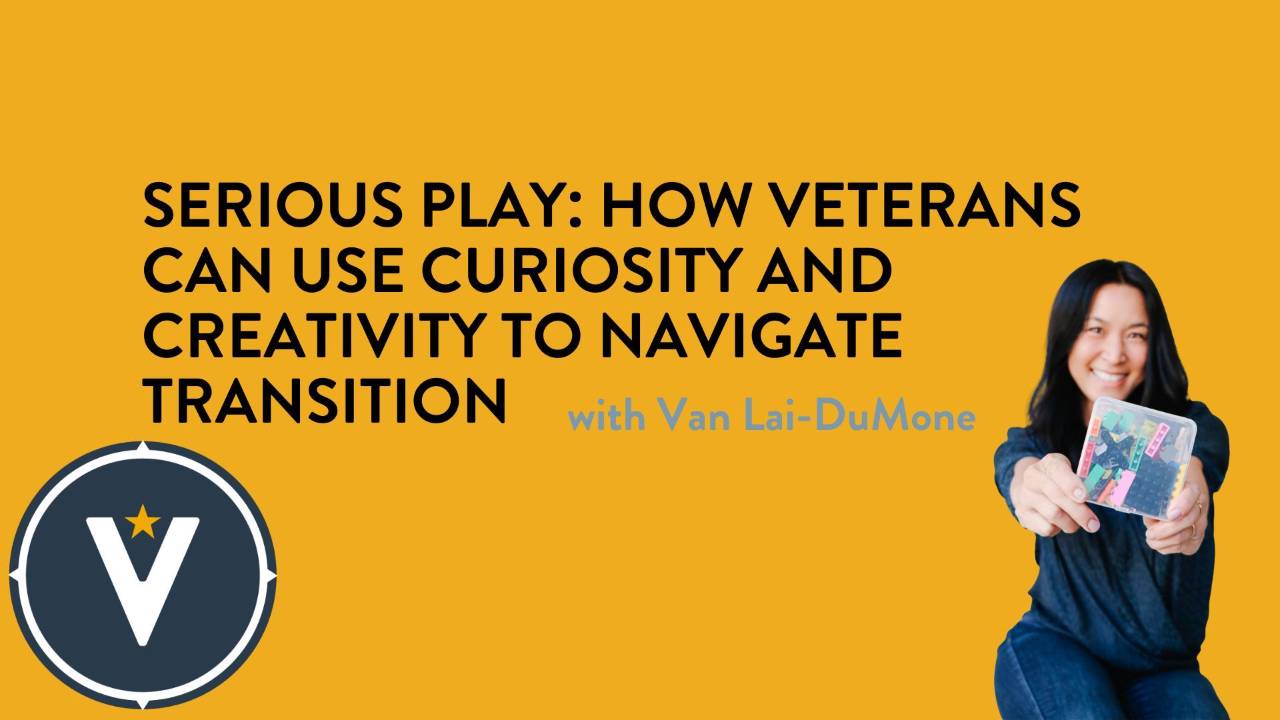
When military veterans leave service, the road ahead can feel foggy and overwhelming. Questions swirl: “What’s next?” “Who am I without the uniform?” “How do I find direction when I’ve spent years following orders?”
While most transition programs jump straight into resumes, LinkedIn, and interview prep, Van Lai-DuMone believes that the first step should look a little different.
It should start with play.
Yes—play.
Van, a leadership and team development expert and longtime collaborator with the Honor Foundation, helps veterans rethink their transition by tapping into something often forgotten in adulthood: creativity. Using tools like LEGO Serious Play, storytelling, and divergent thinking, she creates spaces where veterans can see new possibilities for their lives—and begin moving toward them.
“Your military career informs what you do next—but it doesn’t dictate what you do next,” Van shared in a recent episode of the Vector Accelerator Podcast.
From Refugee to Creative Facilitator
Van’s own journey began far from leadership workshops or veteran classrooms. Her family fled Vietnam in 1975 when she was two years old and resettled at Camp Pendleton, a few miles from the San Diego Honor Foundation campus where she now teaches.
The moment she first stood in that room, facilitating transition night with a group of veterans, was surreal.
“This is no accident that I’m here,” she recalled. “The military helped my family transition. And now here I am, standing in front of veterans, helping them through theirs.”
Her methodology combines storytelling, visual prompts, and hands-on exercises like LEGO builds to help participants access parts of themselves they may have buried—especially in the regimented world of military life.
Why Play Works
To an outsider, the idea of Navy SEALs or senior enlisted personnel sitting around building LEGO models might sound absurd.
But that’s where the magic happens.
“I don’t care if you’re an introvert, extrovert, or an ambivert like me,” Van explained. “If I ask you to solve a problem in a meeting, you might freeze. But if I put LEGO in front of you and ask you to build something, suddenly the ideas come alive. You’re thinking with your hands.”
This tactile, visual approach unlocks divergent thinking—a concept rooted in allowing many ideas to coexist without judgment. Veterans often carry a deep sense of structure and hierarchy from their service. In transition, that mindset can unintentionally narrow their options.
“We often shut ourselves down before we even start,” Van said. “We think, ‘Who am I to do that?’ or ‘That’s not realistic.’ But creativity asks: What if it is?”
Reclaiming Curiosity
Van’s work centers around a question that too often gets overlooked in transition: What are you curious about?
Not, “What’s your next job?”
Not, “What industry are you targeting?”
But: What lights you up?
In her book, What If Pigs Can Fly?, she outlines a practical framework to help people follow their curiosities step by step. She brought that same approach to the podcast, offering veterans a way to explore their next mission:
-
Write down everything you’re curious about for one week.
“Let it be messy. Nothing is too wild,” Van advised. “Maybe it’s starting a food truck. Or working with horses. Get it all down.” -
Filter your list through your personal parameters.
“Ask: What do I want to earn? Where do I want to live? Do I want weekends free?” Narrow the list without killing off the spirit of it. -
Pick one curiosity and take a small step.
“You don’t need to know step two. Just take step one. If it works, great. If not, you’ve got other ideas waiting.”
Proof That It Works
Van shared powerful examples of veterans who transformed their transition by leaning into this process.
“One gentleman built a LEGO model of himself on a yacht. Months later, he sent me a photo: he was a yacht broker in San Diego.”
Another veteran used LEGO Serious Play to realize that entrepreneurship was calling—but he wasn’t ready just yet.
“He built a bridge to business ownership, but as he built it, it tipped over. So he realized, ‘I need a foundation first.’ That’s the kind of clarity this brings.”
The Transition Isn't a Box to Check
As Van and the Vector Accelerator team emphasize, successful transitions aren’t just about employment. They’re about alignment—with your values, identity, and purpose.
“This isn’t about resumes,” Van said. “It’s about possibility. Hope. Reconnection with your story.”
Whether it’s through LEGO, journaling, or simply sitting with your curiosities, the work of transition is deeply personal. But it doesn’t have to be done alone—or without a little play along the way.
Final Thought
As Scott Schimmel shared in the episode, hope isn’t wishful thinking—it’s the belief that tomorrow will be better because you’re going to do something to make it better.
Van’s process gives veterans a tangible, creative, and surprisingly joyful way to do exactly that.
Because your next mission isn’t found in a job board.
It starts with asking: What else might be possible?
How clear are you about your future?
Download a FREE Clear Future Checklist Now!
Author


